Insights
Raising the intake structure at the Gigerwald reservoir
Engineering expertise under time pressure and alpine conditions

«Raising the intake structure ensure the continued production of reliable, clean energy from the Gigerwald reservoir – an investment in security of supply and the sustainable use of alpine water resources.»
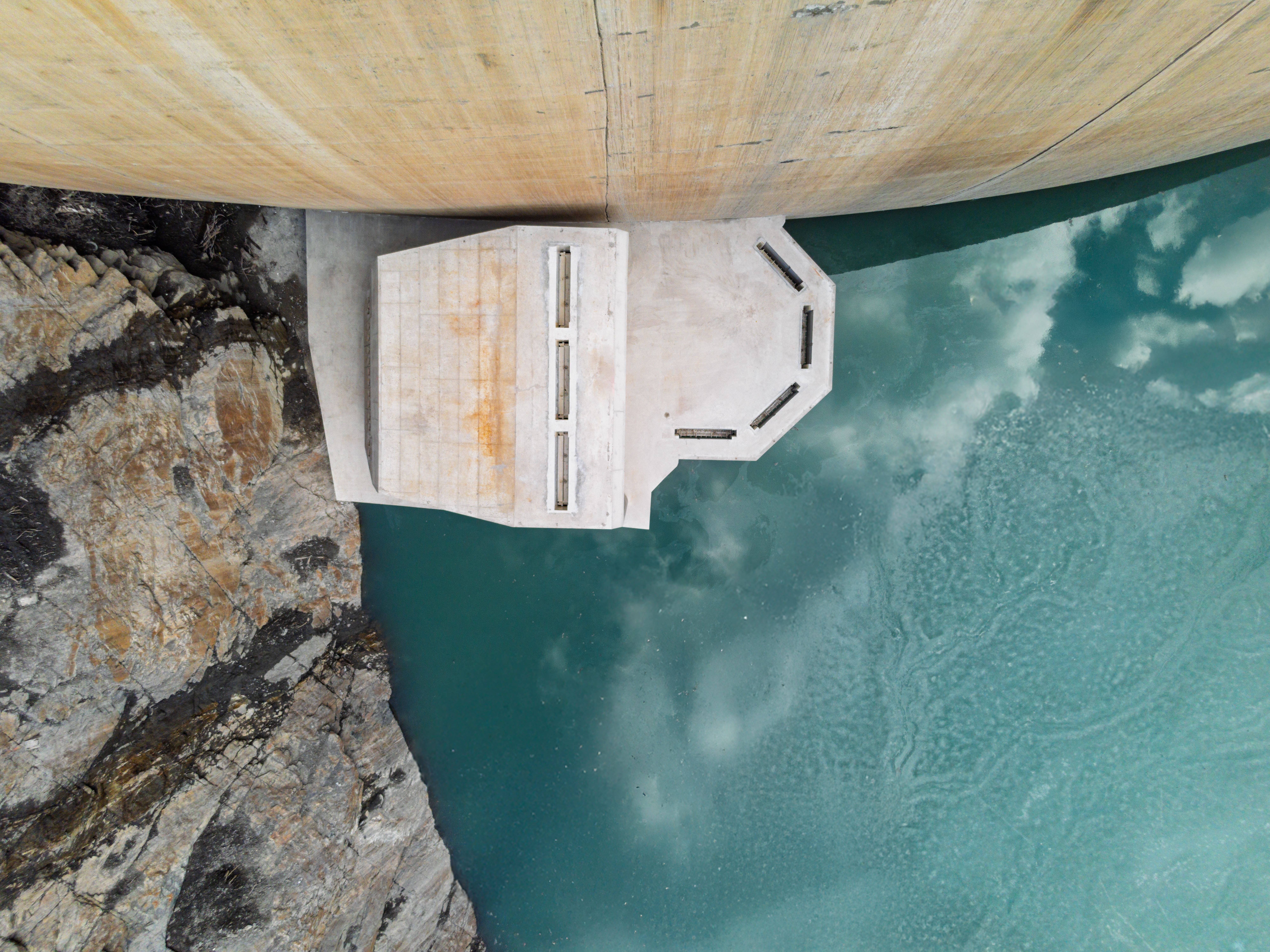
Over decades the sediments accumulated in the Gigerwald reservoir reached the inlet area of the outlet works. In order to maintain the function of the pumped storage system and the safety of the dam, the previously combined structures of the power intake and the bottom outlet were separated and raised. The work was carried out in a short time frame in winter, as everything had to be ready before the snow started to melt.
An alpine structure of significance
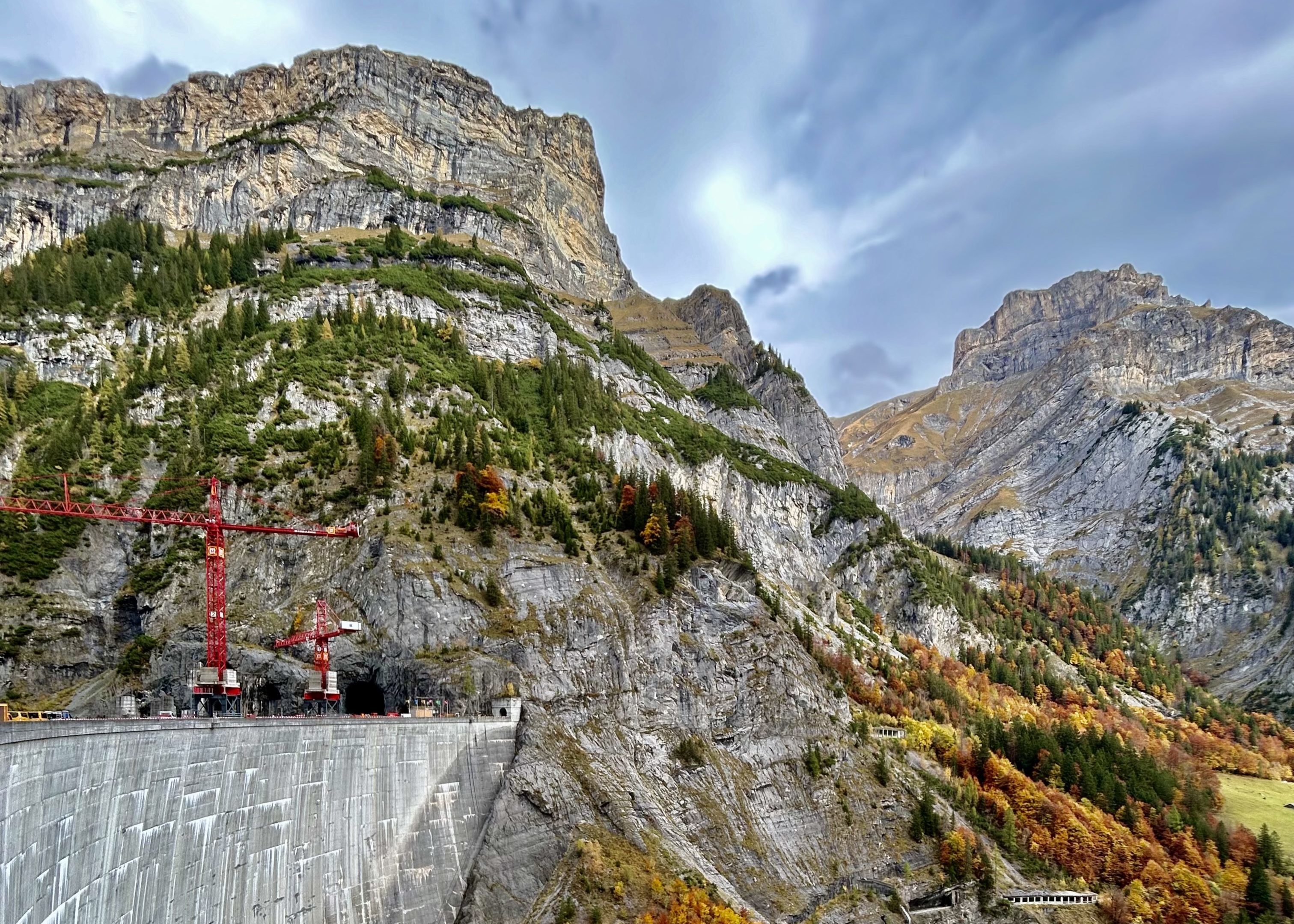
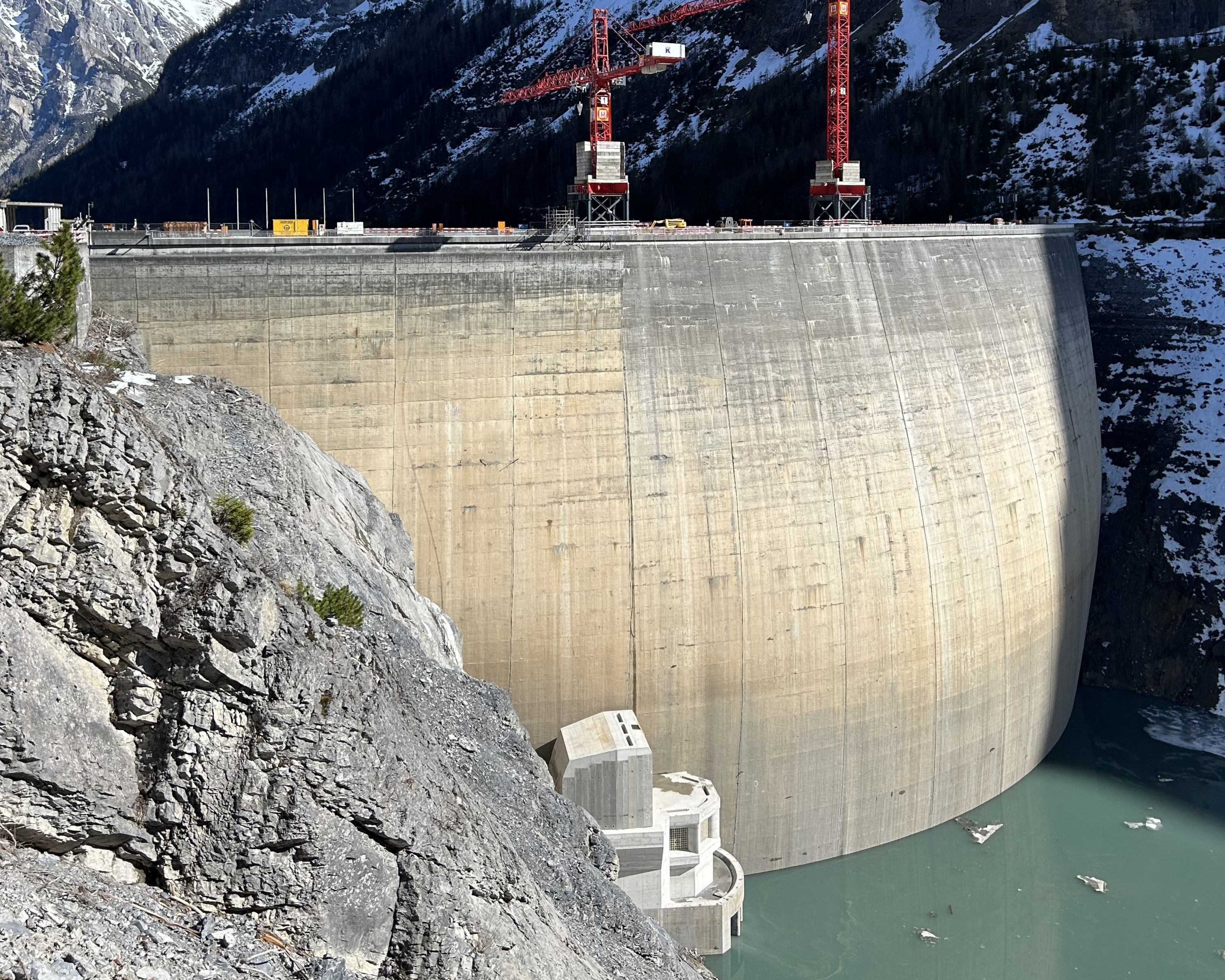
The Gigerwald dam towers in the heart of the St. Gallen Alps – a symbol of power and harmony between engineering skills and nature. Since its completion in 1976, it contributes to the energy and water security of the Sarganserland region and stabilizes the power grid in northeastern Switzerland.
The renovations carried out in 2024 and 2025 strengthened its central elements to ensure the efficiency of the Mapragg hydro power plant for future generations. Lombardi was in charge of design and technical management of the project that combines precision, innovation, and respect for the alpine environment.
Why renovation became necessary
Extensive measures hat already been implemented since the 2000s to reduce sediment load, such as raising the minimum water level and stopping the water supply when turbidity levels were high. Nevertheless, the sediment layer continued to grow. By 2014, the distance to the orifice had dropped to only about two and a half meters. A study of various options ultimately concluded that the most robust and effective long-term solution was to completely raise and hydraulically separate the inlet structures.
Innovation in alpine terrain: constructing with precision
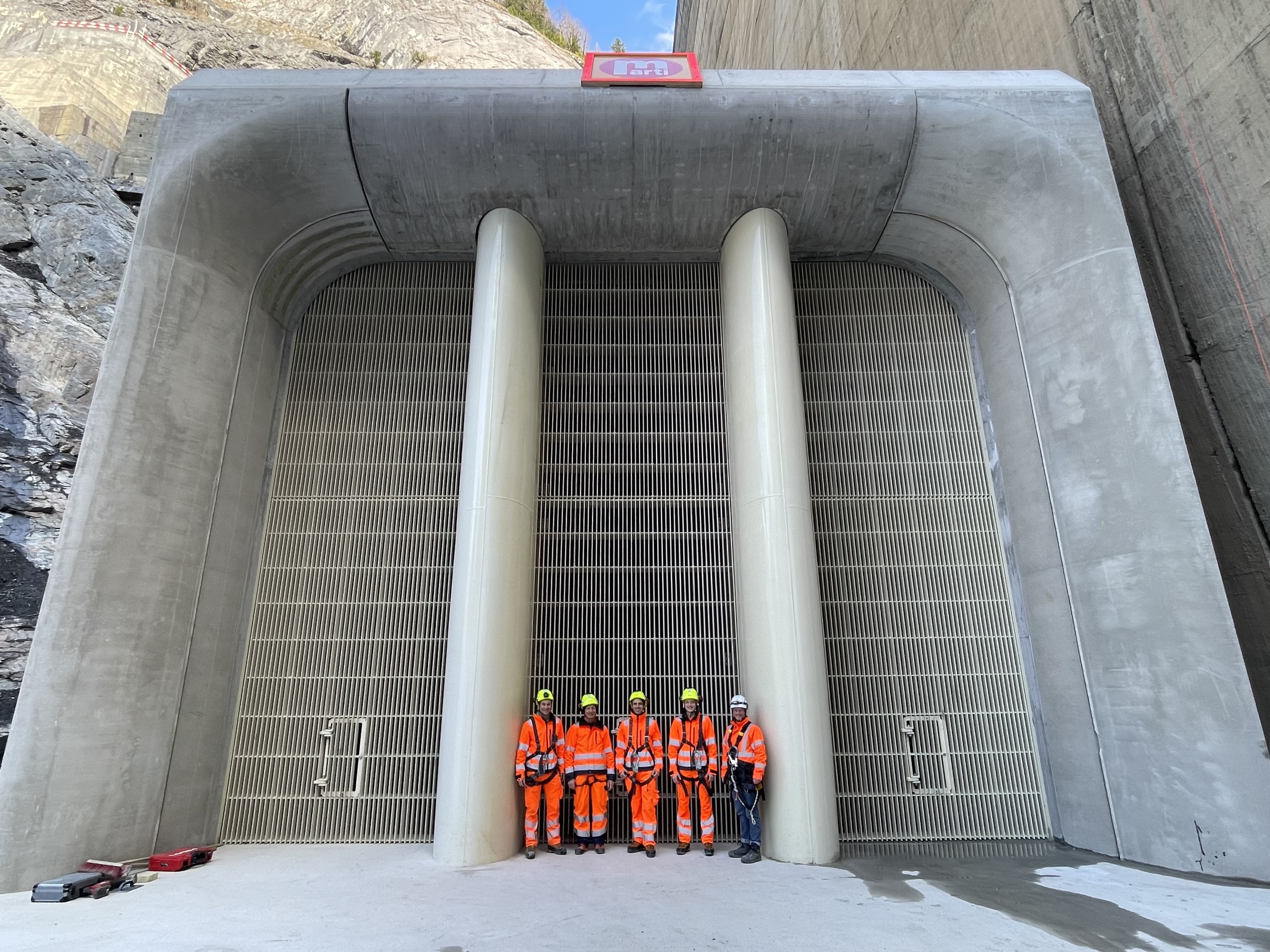
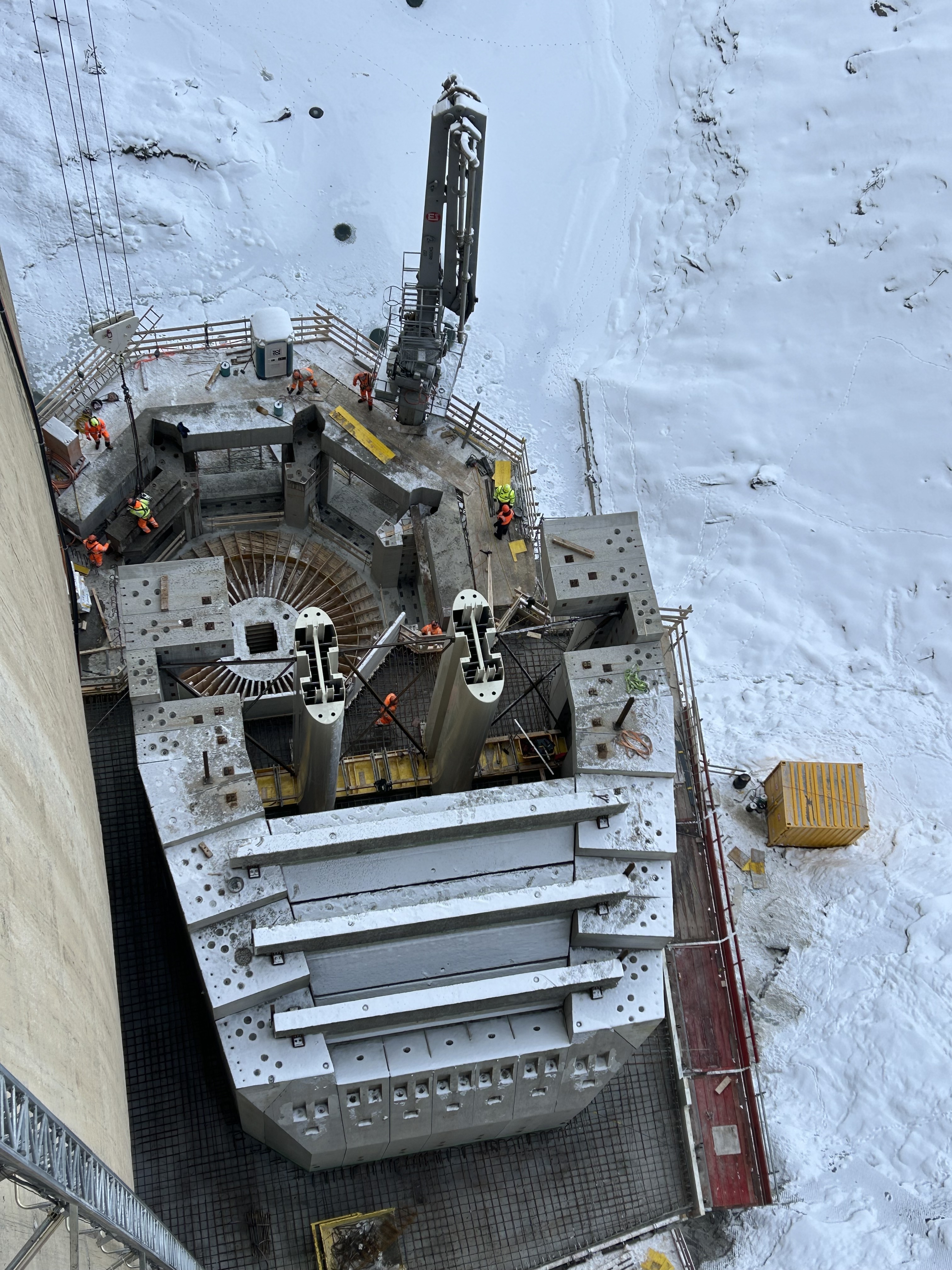
To meet the extremely tight construction deadline, the project team opted for a solution that is rarely used on this scale: 73 prefabricated concrete elements, produced with millimeter precision, digitally scanned, and virtually pre-assembled. This allowed the new structures to be installed quickly and precisely – a decisive advantage given the avalanche season and the tight time frame.
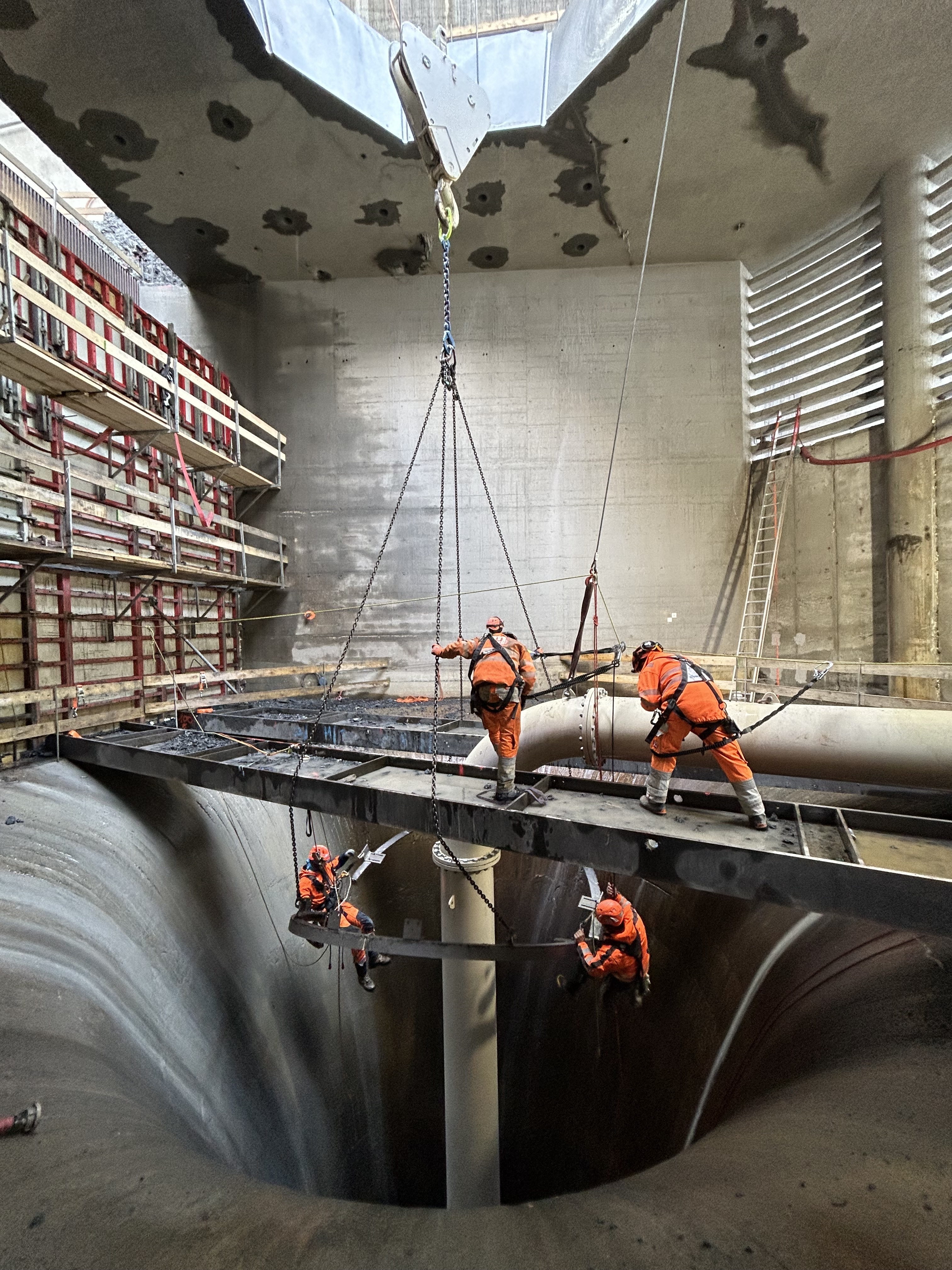
The hood of the power intake was particularly challenging: 39 prefabricated elements had to be positioned so that they formed a single unit hydraulically and statically. The low tolerance and complex geometry required a precisely coordinated assembly.
New intake structures – higher, safer, separate
The new structures were built 18 meters (bottom outlet) and 24 meters (power intake) higher and hydraulically separated from each other. This will enable more flexible operation in the future and make the plant resistant to further sediment increases. The hydraulic performance remains virtually unchanged.
Teamwork under most demanding conditions
The work took a total of seven months and, thanks to careful design and resilient logistics, was completed ahead of schedule – before the snow started to melt. The team comprising Lombardi, Axpo, and Kraftwerke Sarganserland mastered unexpected challenges such as high turbidity levels, blocked trashracks, additional excavation, and sudden weather changes.
Our contribution:
- Study of alternatives & project development
- Overall project planning (general planner role)
- Hydraulic design & modeling
- Design & engineering of the new structures
- Concept and implementation of the precast system
- Site & logistics planning in alpine winter conditions
- Site supervision & site engineering
- Safety & natural hazard concept
- Cooperation with operators & authorities
Ready for the coming decades
With the new intake structures, the Gigerwald reservoir has been restored to safety and efficiency – and remains a key component of the regional energy supply. The project demonstrates how modern engineering, a deep understanding of the alpine environment, and interdisciplinary collaboration can work together to create a structure for generations.
Competences
- Hydroelectric power plants
- Dams and retention structures
150 m
Height of the dam above the construction site.
7
months – Duration of the main work – completed before the snowmelt.
73
Prefabricated concrete elements for faster construction.
33
million m³ Storage capacity of the reservoir.
Lat: 46.9124186
Lng: 9.3915278
Gigerwald

«The rehabilitation work in the alpine winter required the utmost precision. Thanks to good planning and strong cooperation, we were able to renew the intake structures so that the Gigerwald reservoir will continue to reliably supply energy in the future.» Andrea Balestra, Project Leader